
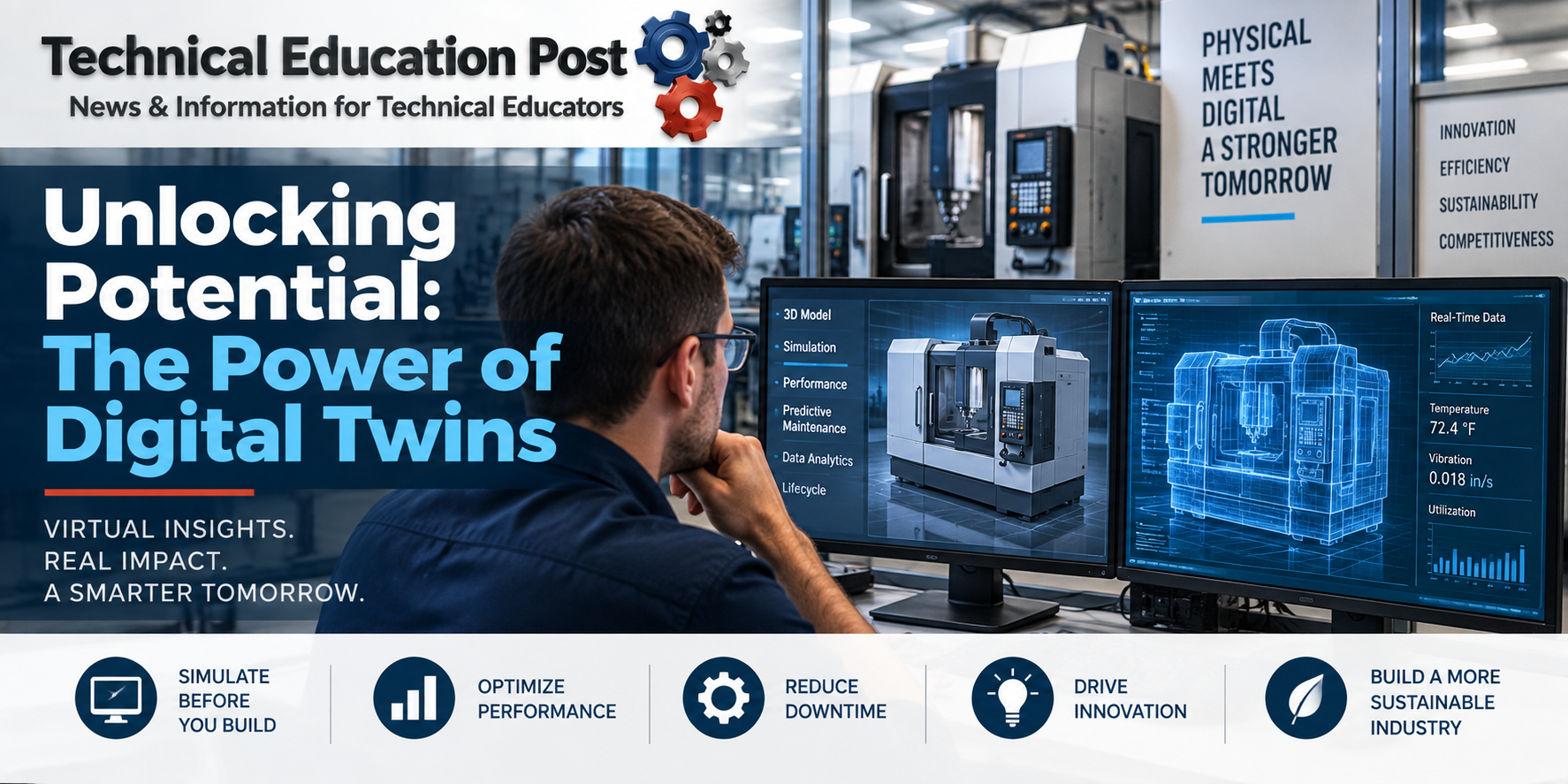

The Digital Echo: Unlocking Manufacturing’s Future with Digital Twins
In the dynamic landscape of modern manufacturing, efficiency, agility, and innovation are no longer optional—they are imperatives. Businesses across sectors are constantly seeking ways to optimize their operations, reduce costs, and bring products to market faster. While advancements in automation and data analytics have been transformative, a new paradigm is emerging that promises to revolutionize how we design, build, and maintain physical assets: the Digital Twin. This article will delve into the core of digital twin technology, exploring its fundamental principles, practical applications, and profound implications for manufacturing professionals, educators, and career seekers alike. Whether you’re a student just starting, an educator shaping the next generation, a technician on the factory floor, or a seasoned manufacturing leader, understanding digital twins is becoming essential for navigating and thriving in the future of industry.
Digital Twins technology is increasingly being recognized for its potential to enhance various sectors, including education and workforce development. A related article discusses how competency-based education can address workforce gaps in Wisconsin, highlighting the importance of aligning educational outcomes with industry needs. For more insights on this topic, you can read the article here: Competency-Based Education Can Help Close Wisconsin’s Workforce Gap.
What Exactly Is a Digital Twin?

At its heart, a digital twin is a virtual replica of a physical object, process, or system. Think of it as a sophisticated, living shadow. This isn’t just a static 3D model; it’s a dynamic, evolving representation that is connected to its physical counterpart through real-time data. This connection is the key differentiator. Sensors embedded in the physical asset continuously stream data – such as temperature, pressure, vibration, speed, location, and operational status – to the digital twin. This data then updates the virtual model, mirroring the current state and behavior of the physical entity with remarkable accuracy.
The Anatomy of a Digital Twin
A robust digital twin comprises several interconnected components:
Physical Entity
This is the real-world asset, whether it’s a single machine, an entire production line, a factory, a product in use, or even a complex supply chain.
Virtual Representation
This is the digital model. It can range from a simple geometric representation to a highly detailed, multi-physics simulation model that captures the physical, chemical, and biological characteristics of the entity. This representation is built using Computer-Aided Design (CAD) models, Finite Element Analysis (FEA) simulations, and other engineering software.
Data Connection
This is the lifeline between the physical and virtual. It involves the use of sensors (IoT devices) to collect data from the physical entity and transmit it to the digital twin. This data can include operational parameters, environmental conditions, performance metrics, and maintenance logs. The frequency and type of data collected depend on the application’s needs.
Digital Twins technology is revolutionizing various industries by creating virtual replicas of physical systems, enabling real-time monitoring and optimization. For those interested in exploring the broader implications of digital innovation in education, a related article discusses the urgent need to disrupt traditional high school models to better prepare students for the future. You can read more about this transformative approach in the article found here.
Analytics and Intelligence
Once the data is received, it’s processed and analyzed. This is where the “intelligence” of the digital twin comes into play. Algorithms, machine learning models, and artificial intelligence (AI) are used to interpret the data, identify patterns, predict future behavior, detect anomalies, and suggest optimal actions.
Interaction and Action
The digital twin isn’t just a passive observer. Users can interact with the virtual model to run simulations, test scenarios, and visualize outcomes. The insights gained can then be used to inform decisions and trigger actions in the physical world, such as adjusting machine settings, scheduling maintenance, or redesigning a component.
Distinguishing Digital Twins from Simulations and Models
It’s crucial to differentiate digital twins from traditional simulations or static models. A simulation often runs scenarios without a direct, real-time connection to a specific physical asset. A CAD model is a design blueprint, often static. A digital twin, however, is a dynamic entity that is continuously synchronized with its physical counterpart. It’s not just about predicting what could happen; it’s about understanding what is happening and what will likely happen, based on real-time performance. This continuous feedback loop makes digital twins exceptionally powerful for real-time monitoring and proactive management.
How Digital Twins Work: The Data-Driven Engine

The functionality of a digital twin hinges on the seamless flow and intelligent processing of data. It’s a cyclical process that enables continuous learning and optimization.
Data Acquisition and Connectivity
The process begins with data acquisition from the physical asset. This involves deploying a network of sensors. For a manufacturing machine, these could be vibration sensors, temperature probes, current meters, or optical sensors. For a factory, this might extend to sensors monitoring environmental conditions, energy consumption, and material flow. The Internet of Things (IoT) is the backbone of this data acquisition, enabling devices to collect and exchange data wirelessly. This data is then transmitted securely to a cloud-based platform or an on-premise server where the digital twin resides.
Data Processing and Model Synchronization
Once the data arrives, it needs to be processed. This involves cleaning, filtering, and normalizing the data to ensure accuracy and consistency. This processed data is then used to update the virtual representation. If a machine’s temperature sensor reports a rising reading, the digital twin’s virtual representation of that machine will also show an increased temperature. This synchronization happens in near real-time, ensuring the digital twin reflects the current state of the physical asset.
Advanced Analytics and Predictive Capabilities
This is where the true power of the digital twin emerges. The synchronized data is fed into sophisticated analytical engines. These can include:
Machine Learning Algorithms
For tasks like anomaly detection. By analyzing historical and real-time data, ML models can identify deviations from normal operating patterns that might indicate an impending failure.
AI-Powered Predictive Maintenance
This moves beyond reactive repairs. By predicting when a component is likely to fail based on its operational history and current performance, maintenance can be scheduled proactively, minimizing downtime and reducing costs.
Simulation and Scenario Planning
Users can then leverage the digital twin to run “what-if” scenarios. For example, a manufacturing engineer might simulate the impact of increasing the speed of a conveyor belt by 10% on the lifespan of its motors and the overall throughput of the line. The digital twin can predict the stress on components and the resulting potential for bottlenecks or failures.
Visualization and User Interface
The insights generated by the digital twin are typically presented through an intuitive visual interface. This could be a dashboard displaying key performance indicators (KPIs), a 3D rendering of the asset with overlayed data, or augmented reality (AR) visualizations that allow technicians to see real-time data superimposed on the physical machine. This visual aspect makes complex data understandable and actionable.
Feedback Loop for Optimization
The insights derived from the digital twin are not just for observation. They are intended to drive action. If the digital twin predicts a failure, a work order can be automatically generated for maintenance. If simulations show that a minor adjustment to a process can increase efficiency, that adjustment can be implemented on the physical asset. This continuous feedback loop—from physical to digital, analyzed, and back to physical for action—is what makes digital twins so transformative.
Why Digital Twins Matter: Revolutionizing Operational Excellence
The implications of digital twin technology extend far beyond mere digital replication. They fundamentally alter how industries approach design, operations, maintenance, and innovation, leading to tangible improvements in efficiency, cost-effectiveness, and competitiveness.
Enhancing Operational Efficiency and Productivity
One of the most significant benefits of digital twins is their ability to optimize operations in real-time. By providing a clear, data-driven view of how a system or asset is performing, manufacturers can identify bottlenecks, inefficiencies, and areas for improvement.
Real-time Monitoring and Control
Digital twins allow for continuous monitoring of machines and processes. This means operators can see exactly what’s happening on the factory floor, even remotely. If a machine’s performance dips or an anomaly is detected, the digital twin can alert personnel immediately, allowing for swift intervention before a minor issue escalates into a major problem. This proactive approach prevents costly downtime.
Process Optimization
By simulating different operational parameters within the digital twin, engineers can determine the most efficient settings for machinery, assembly lines, or even entire factories. This can lead to increased throughput, reduced energy consumption, and minimized waste. For instance, a digital twin of a packaging line might reveal that slightly altering the speed of a conveyor belt can prevent jams and increase the number of units processed per hour without compromising quality.
Enabling Predictive Maintenance and Reducing Downtime
Traditional maintenance often relies on fixed schedules or responding to failures after they occur. Digital twins usher in an era of true predictive maintenance.
Accurate Failure Prediction
By analyzing sensor data (vibration, temperature, pressure, etc.) and comparing it to historical performance, digital twins can predict the likelihood of component failure with high accuracy. This allows maintenance teams to schedule interventions precisely when needed, rather than performing unnecessary maintenance or waiting for a breakdown.
Minimizing Unplanned Downtime
Unplanned downtime is one of the biggest cost drivers in manufacturing. By predicting and preventing failures, digital twins drastically reduce the occurrence of unexpected stoppages. This not only saves money on repairs and lost production but also improves overall equipment effectiveness (OEE).
Improving Product Design and Development
Digital twins are not