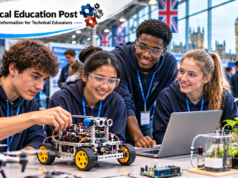


The semiconductor manufacturer’s second $80,000 donation to Tippecanoe School Corporation supports hands-on STEM learning, including high school robotics programs that connect engineering, programming, and teamwork with future technical careers.
Semiconductor manufacturer SK hynix is continuing its investment in Indiana STEM education with a second $80,000 donation to Tippecanoe School Corporation (TSC), supporting hands-on learning opportunities that help students explore science, technology, engineering, and mathematics.
The school district announced the contribution on November 5, 2026, emphasizing the importance of industry partnerships in helping students apply classroom concepts to real engineering challenges.
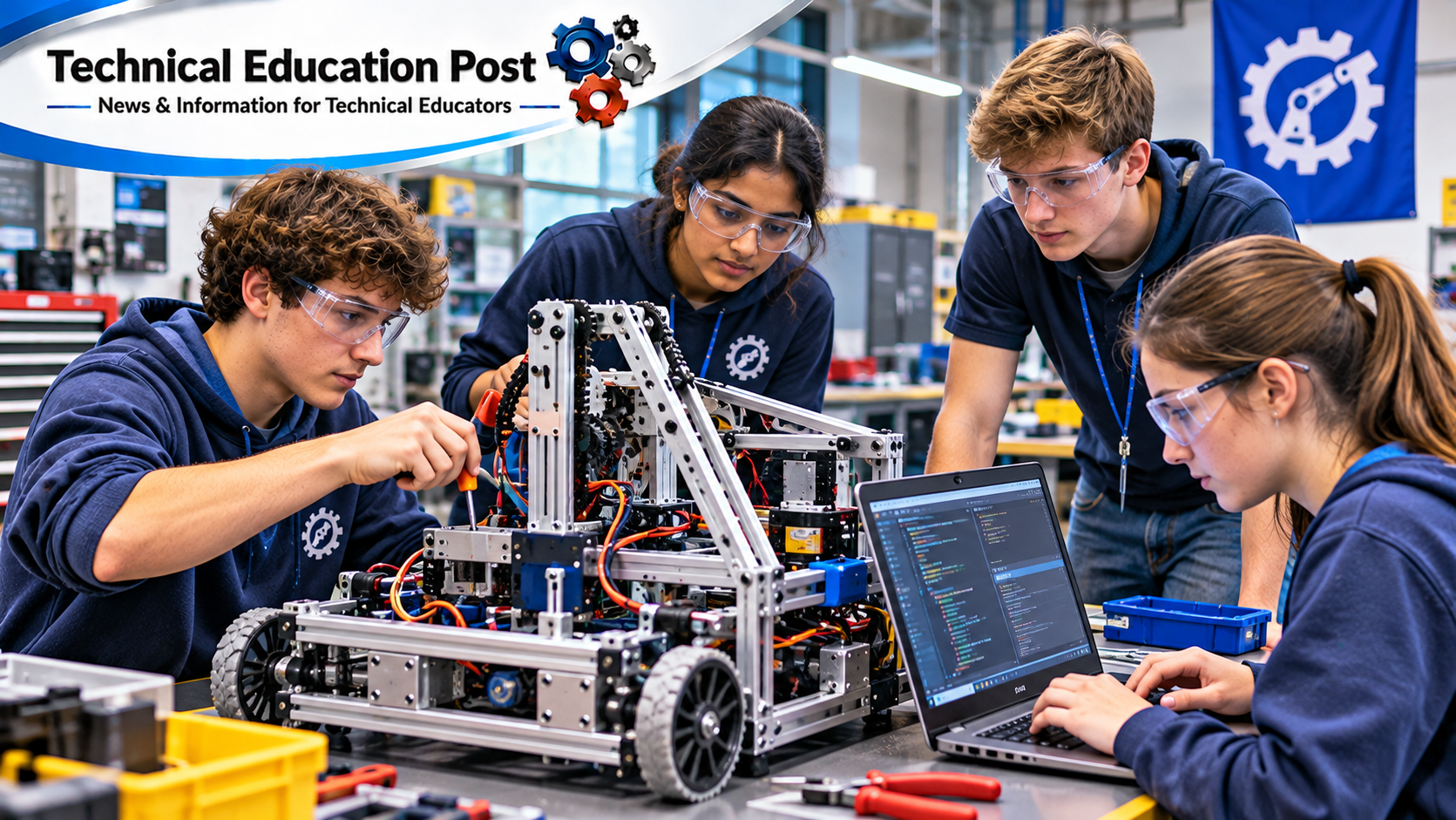
Robotics programs at Harrison and McCutcheon high schools are among the activities highlighted in the announcement. Students in these programs design, build, program, and test competitive robots while developing technical and collaborative skills.
The investment comes as semiconductor manufacturers and other advanced technology employers increasingly recognize the importance of developing STEM talent before students reach college or enter the workforce.
For educators, the significance extends beyond the donation itself. The partnership illustrates how industry support can strengthen project-based learning, reduce barriers to participation, and help students discover technical career opportunities.
Key Takeaways
- SK hynix has made a second $80,000 donation to Tippecanoe School Corporation, representing $160,000 across the two contributions.
- The investment supports hands-on STEM learning, including robotics and other educational opportunities.
- Harrison and McCutcheon high schools are highlighted for their student robotics programs.
- McCutcheon’s FIRST Team 4272 Maverick Robotics was part of an alliance that won the 2025 FIRST Robotics Competition World Championship.
- Students develop transferable skills involving engineering design, programming, troubleshooting, teamwork, and project management.
- The partnership offers a model for connecting regional employers with secondary STEM and career and technical education programs.
What SK hynix Announced
Tippecanoe School Corporation announced that SK hynix had provided its second $80,000 contribution to support STEM learning opportunities across the district.
The funding is intended to strengthen educational experiences that connect academic instruction with practical technical challenges.
The district highlighted its high school robotics programs as examples of how students can apply engineering and technology concepts through collaborative projects.
Robotics teams at Harrison and McCutcheon high schools require students to combine mechanical design, electrical systems, programming, and problem-solving to develop functioning machines.
The work also involves project planning, testing, competition preparation, and collaboration under deadlines.
These activities help students experience engineering as an iterative process rather than a collection of isolated classroom subjects.
What the Donation Supports
The district’s announcement describes the investment as support for hands-on STEM opportunities, with robotics programs serving as a prominent example.
It does not provide a complete itemized breakdown of how the $80,000 will be distributed among individual programs.
However, the announcement makes clear that robotics teams face significant expenses associated with components, equipment, and competition travel.
McCutcheon engineering teacher and robotics sponsor Zach McKeever emphasized that financial support helps reduce those pressures and allows students to concentrate on building robots and developing technical skills.
For school administrators, the broader lesson is that successful STEM programs require sustained operational support, not simply an initial equipment purchase.
Indiana Robotics Students Are Already Demonstrating Advanced Skills
The investment builds on a strong robotics foundation within Tippecanoe School Corporation.
In 2025, McCutcheon’s FIRST Team 4272, Maverick Robotics, participated in an alliance that won the FIRST Robotics Competition World Championship.
FIRST Robotics Competition challenges high school teams to design, manufacture, program, and operate robots for a new competitive challenge each season.
Students must develop technical solutions within defined rules, budgets, schedules, and performance requirements.
The experience introduces them to engineering practices similar to those used in industry.
Engineering Design
Students evaluate requirements, develop concepts, select components, and refine mechanical systems.
Programming and Controls
Robotics teams use software, sensors, and electronic control systems to coordinate machine behavior.
Manufacturing and Assembly
Participants may fabricate components, assemble mechanisms, and troubleshoot mechanical failures.
Testing and Quality Improvement
Teams evaluate performance, identify problems, and modify designs based on evidence.
Communication and Teamwork
Students coordinate responsibilities, document decisions, and explain technical solutions.
These competencies extend well beyond robotics competitions.
They are relevant to advanced manufacturing, automation, engineering technology, mechatronics, and industrial maintenance.
Why a Semiconductor Company Is Investing in High School STEM
Semiconductor manufacturing depends on a diverse technical workforce.
Chip production facilities require engineers, technicians, equipment specialists, maintenance professionals, process operators, and workers with expertise in electronics, automation, and manufacturing systems.
Although robotics competitions do not directly replicate semiconductor fabrication, they introduce many of the foundational competencies used in advanced industrial environments.
Students who learn to integrate sensors, motors, controllers, and software begin developing the systems-thinking skills required in increasingly automated workplaces.
The Semiconductor Workforce Connection
Modern semiconductor production involves tightly controlled processes, sophisticated equipment, and extensive automation.
Technicians may need to understand electrical systems, mechanical components, instrumentation, robotics, process control, and troubleshooting.
Early exposure to these concepts can help students recognize career pathways they might otherwise overlook.
TechEd Magazine previously examined this transition in Intel and PLTW Bring Semiconductor Manufacturing Into High School Classrooms.
That initiative introduces semiconductor manufacturing alongside robotics, artificial intelligence, cybersecurity, and smart manufacturing concepts.
The SK hynix investment represents a different approach: supporting local STEM experiences that help students build technical foundations before choosing specialized career pathways.
Both models illustrate the growing importance of connecting secondary education with advanced technology industries.
Industry Partnerships Can Reduce Barriers to STEM Participation
Competitive robotics programs can be expensive.
Schools may need to purchase motors, controllers, sensors, structural materials, tools, safety equipment, and replacement components.
Teams may also face registration fees, transportation expenses, and travel costs.
These requirements can limit participation, particularly when programs depend heavily on fundraising or family contributions.
Industry donations can help schools provide more consistent access to technical experiences.
However, financial contributions alone do not guarantee strong educational outcomes.
Programs also need qualified instructors, accessible facilities, student mentoring, and clear learning objectives.
The Role of Teachers and Mentors
Robotics advisers often manage responsibilities extending far beyond conventional classroom instruction.
They help students plan projects, establish safe working procedures, coordinate competition schedules, and troubleshoot technical problems.
Industry mentors can provide additional expertise, exposing students to professional engineering practices and workplace expectations.
For employers considering STEM partnerships, providing knowledgeable volunteers may be as valuable as donating equipment.
From Robotics Competitions to Technical Careers
Robotics education can introduce students to several occupational pathways.
| Robotics experience | Related career fields |
|---|---|
| Mechanical design and fabrication | Mechanical engineering, manufacturing technology |
| Programming and sensors | Software development, automation engineering |
| Motors and electrical systems | Electrical engineering, industrial maintenance |
| Machine troubleshooting | Mechatronics, equipment maintenance |
| Testing and performance analysis | Quality engineering, manufacturing process improvement |
| Project planning and teamwork | Engineering project management, technical operations |
These relationships do not mean that participation in robotics automatically qualifies a student for a particular occupation.
Instead, robotics provides early exposure to concepts and practices that students can develop through further education, apprenticeships, certifications, and professional experience.
The distinction is important when schools evaluate program outcomes.
A successful STEM initiative should help students understand available pathways and develop transferable competencies rather than promising a direct employment outcome from competition participation alone.
STEM Education Is Becoming Part of Regional Workforce Strategy
The SK hynix contribution reflects a broader shift in how employers participate in technical education.
Historically, some industry partnerships focused primarily on scholarships, equipment donations, or occasional career presentations.
Increasingly, employers are becoming involved in the development of longer-term talent pipelines.
These partnerships may connect K–12 education, community colleges, universities, workforce organizations, and local industry.
The objective is to help students encounter technical careers earlier and understand how their educational choices relate to employment opportunities.
TechEd Magazine examined a similar approach in Dayton STEM School Builds K–12 Advanced Manufacturing Center to Start the Workforce Pipeline Earlier.
The Ohio initiative demonstrates how schools are introducing manufacturing concepts before students reach traditional high school CTE programs.
Together, these developments suggest that early career awareness is becoming an increasingly important component of workforce development.
What Makes an Effective Industry–School STEM Partnership?
Districts considering similar partnerships should focus on educational value and sustainability.
1. Start With Student Learning Objectives
Identify the technical and transferable competencies students should develop.
Equipment and funding decisions should support those objectives.
2. Connect Activities to Career Pathways
Help students understand how robotics, programming, and engineering relate to regional industries and postsecondary programs.
3. Support Instructor Development
Provide teachers with access to training, industry expertise, and professional networks.
4. Reduce Participation Barriers
Consider how funding can support students who might otherwise be unable to participate because of equipment, transportation, or competition expenses.
5. Encourage Meaningful Employer Engagement
Employers can contribute through mentoring, facility tours, technical presentations, internships, and curriculum feedback.
6. Measure Outcomes
Track student participation, technical skill development, retention, postsecondary transitions, and other relevant educational outcomes.
Competition awards can demonstrate achievement, but they should not be the only measure of program success.
The Challenge of Sustaining Advanced STEM Programs
One-time grants and donations can help launch or expand educational programs.
Maintaining those programs requires additional planning.
Robotics equipment becomes outdated, components wear out, software changes, and competition requirements evolve.
Schools must also recruit and retain qualified instructors.
TechEd Magazine explored these challenges in The Great Equipment Gap: Why New Labs Don’t Automatically Create Workforce Readiness.
That analysis emphasizes that purchasing advanced technology is only one part of creating an effective technical education program.
For Tippecanoe School Corporation and other districts, the long-term value of industry investment will depend on how effectively funding supports ongoing student learning.
What Educators and Administrators Should Do Next
The SK hynix partnership offers several practical lessons for school leaders.
First, districts should identify employers whose technical expertise aligns with existing STEM programs.
Second, educators should document the educational outcomes that industry support can strengthen.
Third, schools should develop partnership proposals that include specific opportunities for mentoring, equipment support, career exploration, and student participation.
Finally, administrators should consider how STEM programs connect to community colleges, apprenticeships, and other postsecondary pathways.
The goal should be to create a coherent progression from early technical exposure to advanced learning and employment.
Frequently Asked Questions
How much did SK hynix donate to Tippecanoe School Corporation?
The company announced its second $80,000 donation in November 2026, bringing the combined value of the two reported contributions to $160,000.
What programs will benefit?
The district describes the funding as support for hands-on STEM opportunities and highlights robotics programs at Harrison and McCutcheon high schools.
What is FIRST Robotics Competition?
FIRST Robotics Competition is a high school robotics program in which students design, build, program, and compete with robots while developing technical and teamwork skills.
Did McCutcheon High School win a world championship?
McCutcheon’s FIRST Team 4272 Maverick Robotics was part of an alliance that won the 2025 FIRST Robotics Competition World Championship.
Why are semiconductor companies interested in STEM education?
Semiconductor manufacturing requires workers with competencies in engineering, electronics, automation, equipment maintenance, and other technical fields.
Do robotics programs prepare students for semiconductor careers?
Robotics can introduce transferable technical foundations, although specialized semiconductor careers generally require additional education or occupational training.
How can schools attract industry support?
Districts can develop partnerships around clearly defined educational objectives, workforce connections, mentoring opportunities, and measurable student outcomes.
What should schools measure beyond competition results?
Useful indicators include student participation, skill development, retention, career awareness, postsecondary enrollment, and progression into technical training.
TechEd Magazine Perspective
SK hynix’s second $80,000 contribution to Tippecanoe School Corporation illustrates how industry investment can strengthen technical education before students enter college or the workforce.
The immediate benefits are tangible: additional resources for robotics, hands-on engineering, and student participation.
The longer-term significance is broader.
Semiconductor manufacturers and other advanced technology companies depend on workers who can combine technical knowledge with problem-solving, collaboration, and the ability to learn unfamiliar systems.
Robotics programs provide an accessible environment for developing those capabilities.
However, the most effective partnerships will be those that move beyond financial contributions to create lasting connections among students, educators, employers, and postsecondary institutions.
For schools, the opportunity is to transform industry support into sustained educational experiences.
For employers, the opportunity is to help develop a future workforce while giving young people a clearer understanding of technical careers.
And for students, the greatest benefit may be discovering that engineering and advanced manufacturing are not distant concepts reserved for specialists.
They are fields students can begin exploring, building, and contributing to today.
Sources and Further Reading
Primary source
Tippecanoe School Corporation, November 5, 2026:
SK hynix Investment Expands STEM Opportunities for TSC Students
Related TechEd Magazine Coverage
- Intel and PLTW Bring Semiconductor Manufacturing Into High School Classrooms
- Dayton STEM School Builds K–12 Advanced Manufacturing Center
- Semiconductor Education Is Becoming National Infrastructure
- The Great Equipment Gap: Why New Labs Don’t Automatically Create Workforce Readiness
Additional Resources